Updated November 2026 · 11 products rated
Best sergers and coverstitch machines compared (2026)
Eight sergers and three coverstitch machines, best-rated first. Decide which finish you need, a trimmed and wrapped edge or a stretchy hem, then compare thread options and how much help each one gives you with threading.
In short
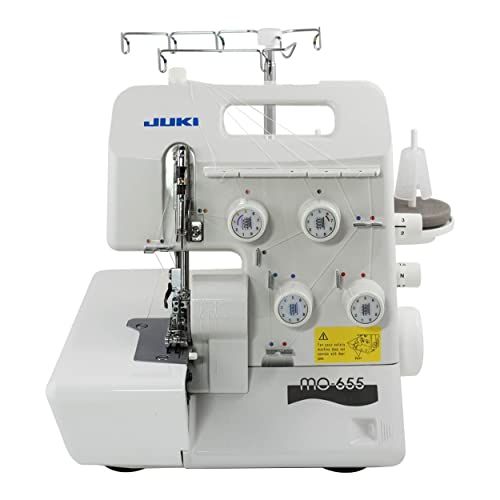 Our top pickJuki MO-655 Serger6.2/10. The only serger here that lists 2, 3, 4 and 5 threads.$899 on Nov 17, 2026, may have changed
 Best for beginnersJuki MO-50E Serger6.1/10. Lay-in tensions, an automatic lower looper threader and a built-in rolled hem.$299 on Nov 17, 2026, may have changed
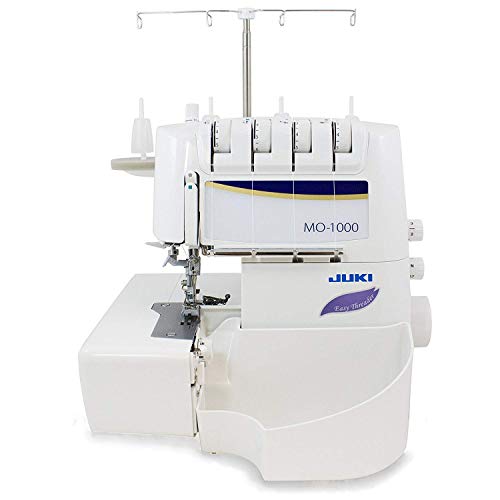 Easiest threadingJuki MO-1000 Serger5.9/10. Push-button jet-air looper threading, for anyone who dreads the lower looper.$1,299 on Nov 17, 2026, may have changed
No time to read on? The Juki MO-655 Serger has the widest stitch range on paper. If threading is what puts you off, look at the Juki MO-1000 or the Juki MO-50E first.
11 products

No product matches these filters.
Product images: Amazon listings
Which serger should you buy?
There's no single best serger, only the one that suits the seams you sew most. This is how we would shortlist from this page, going by what each listing states:
- First serger, knits and everyday seams: the Juki MO-50E Serger. It lists 3 or 4 threads, lay-in tensions, adjustable differential feed, a built-in rolled hem, an automatic lower looper threader and a retractable upper knife. No other listing in this collection names that many beginner helpers.
- Every stitch option, including a 5-thread safety stitch for wovens: the Juki MO-655 Serger, the only one here with 2, 3, 4 and 5 threads.
- Threading is why your last serger lives in a cupboard: the Juki MO-1000 Serger threads its loopers at the push of a button, with a jet of air.
- You would rather stay with SINGER: the SINGER S0100 Serger, S0230 and HD0500S all list 2, 3 and 4 threads. The S0230 adds colour-coded threading paths, and the HD0500S lists up to 1,300 stitches per minute for thicker fabric.
- Lots of sleeves, cuffs and children's clothes: the Juki MO-80CB Free-Arm Serger, built around a free arm.
- T-shirt hems rather than edges: that is a coverstitch job. The Janome CoverPro 900CPX is the free-arm one; more on that below.
The ratings sit close together, and most of the gap comes from how much each listing documents. Pick the feature that solves your problem, not the extra tenth of a point.
Serger, overlocker or overlock machine?
It's the same machine on both sides of the Atlantic. Americans mostly say serger; in the UK and much of Europe it is an overlocker or overlock machine. Whatever the box says, the job is the same: a knife trims the seam allowance and the loopers wrap thread around the fresh edge, all in one pass.
What a serger will not do: buttonholes, zippers, topstitching or quilting. It sits next to your sewing machine, not in its place. Still not sure you need one at all? Our guide on the serger vs sewing machine question lists the signs that it is time.
2, 3, 4 or 5 threads: what you will actually use
Thread count is the first number on every serger listing, and the one people overpay for most often.
- 2 threads: a light overedge or a flatlock seam, for fine fabric and decorative flat seams.
- 3 threads: the classic edge finish and the rolled hem, for napkins, ruffles and raw edges on wovens.
- 4 threads: an overlock seam with a second needle line for strength. This is the one for T-shirts, leggings and sweatshirts.
- 5 threads: an overlock plus a separate straight seam beside it, the safety stitch. Seam and finish in one go on woven garments.
For most home sewing, a 2/3/4-thread machine covers it. The five-thread safety stitch earns its place if you sew a lot of wovens and like finishing as you go. If that's not you, don't pay for it.
What makes a serger easier for beginners
Sergers have a reputation for being fiddly, and threading is most of it: up to four or five threads, each with its own path. These features take the edge off, so check which ones a listing actually names.
- Looper threading help. The lower looper is the classic stumbling block. The MO-50E lists an automatic lower looper threader, the MO-1000 jet-air threading, and the HD0500S an LED-lit lower looper threading system.
- Lay-in tensions. The thread drops into the tension discs instead of being fed through by hand, so it seats properly. The MO-50E lists them.
- Differential feed. Two sets of feed dogs moving at different speeds, so knits do not stretch into waves and light fabric does not pucker. The MO-50E lists it as adjustable. If you sew knits, treat it as a must and confirm it in the manual whenever a listing does not name it.
- A knife you can retract. Handy for decorative edges, or when you want to sew without trimming. Listed on the MO-50E.
- Colour-coded threading paths. Printed guides inside the machine. The SINGER S0230 listing calls them out.
An automatic tension system goes one step further: the SINGER Professional 14T968DC Serger is described with fully automatic self-adjusting tension. Nice to have, but you will still want to run each new fabric over a scrap before the real seam.
What each listing states
Thread options and the features each serger listing names, best-rated first. Where it says "Not stated", the listing is silent: ask the seller or read the manual before you order.
| Product | Rating | Threads | Also stated in the listing |
|---|---|---|---|
| Juki MO-655 Serger | 6.2 | 2, 3, 4 and 5 | Five-thread safety stitch (overlock plus a separate straight seam) |
| Juki MO-50E Serger | 6.1 | 3 or 4 | Lay-in tensions, adjustable differential feed, built-in rolled hem, automatic lower looper threader, retractable upper knife |
 SINGER HD0500S Heavy Duty Serger | 6.1 | 2, 3 and 4 | Heavy Duty line, up to 1,300 stitches per minute, LED-lit lower looper threading |
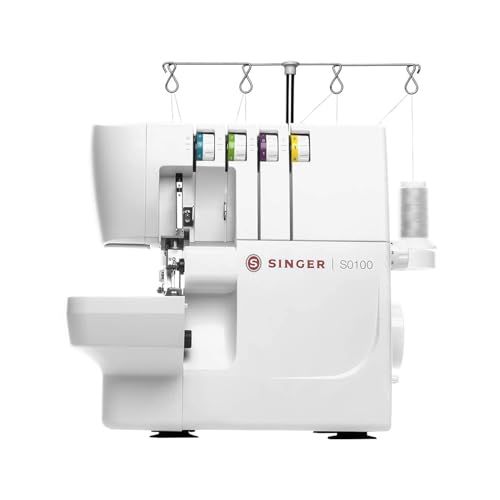 SINGER S0100 Serger | 6.1 | 2, 3 and 4 | High-speed serger |
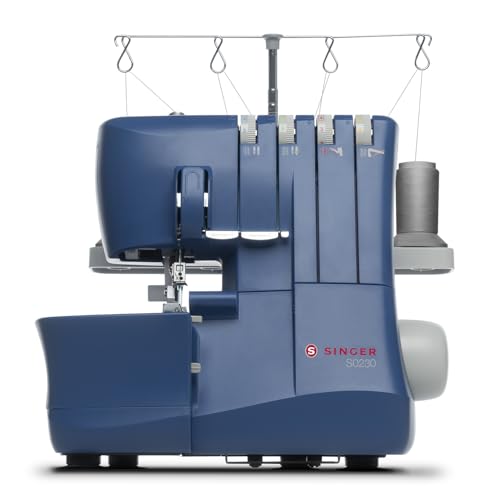 SINGER S0230 Navy Blue Serger | 6.1 | 2, 3 and 4 | High-speed serger, colour-coded threading paths |
| Juki MO-1000 Serger | 5.9 | Not stated | Push-button jet-air looper threading |
 Juki MO-80CB Free-Arm Serger | 5.8 | Not stated | Free arm for sleeves and cuffs |
 SINGER Professional 14T968DC Serger | 5.6 | Not stated | Accessory kit, fully automatic self-adjusting tension |
Serger or coverstitch machine for hems?
If what you really want is the flat, double-stitched hem of a bought T-shirt, a serger will not make it. That is a coverstitch machine: two or three needles on top, a looper underneath, and no knife at all. A serger's rolled hem is a different finish, wrapped around a trimmed edge.
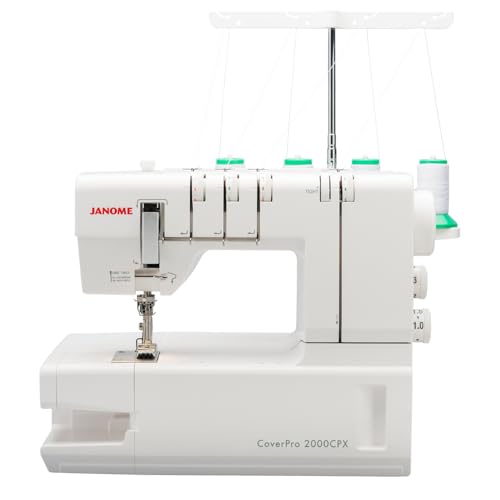
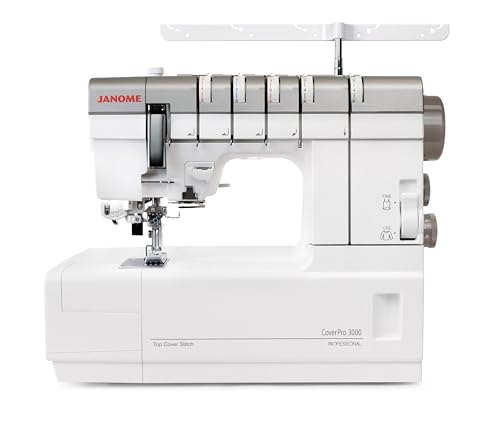
The three Janome machines in this collection are coverstitch machines. The Janome CoverPro 900CPX is the free-arm one, with chain and cover stitches, differential feed and an extra-large bed. The Janome CoverPro 2000CPX lists the widest set of needle setups, up to a three-needle triple cover stitch. Plenty of knit sewists end up with both machines on the table: the serger joins and finishes, the coverstitch hems. Our serger vs coverstitch guide helps you decide which comes first.
Before you order: five quick checks
- Needles. Sergers often take a specific needle system. Look up the exact type in the manual and keep a spare pack in the drawer before the first project.
- Thread on cones. A four-thread seam runs four cones at once. A cone tray like the ArtBin 6901AB stops them rolling off the table between projects.
- A spare knife. The lower knife wears with use. Check that replacements are sold for your model before you need one.
- Room around the machine. Trimmings fly. A tray or a small bin under the knife saves a lot of sweeping.
- Today's price. We have no recorded price for these models yet, so each card says "See current price". The button opens the exact listing with today's offer.
Sewing denim and canvas as well? The machine for that is on the sewing side: see our heavy-duty sewing machine guide.
Frequently asked questions
What is the best serger for beginners?
On paper, the Juki MO-50E Serger. Its listing names the features that make a first serger easier: lay-in tensions, an automatic lower looper threader, adjustable differential feed and a built-in rolled hem. If threading worries you most, the Juki MO-1000 Serger with jet-air looper threading is the other one to look at.
Which serger has the most stitch options?
The Juki MO-655 Serger (6.2/10), the only model here that lists 2, 3, 4 and 5 threads, including the five-thread safety stitch.
What is a good budget serger?
We have no recorded price for these sergers yet, so we will not call one the cheapest. The real saving is skipping what you will not use: a 2/3/4-thread machine like the SINGER S0100 Serger covers rolled hems, edge finishing and knit seams for most home sewing. The button shows today's price.
Is an overlocker the same as a serger?
Yes. Serger is the usual American name, overlocker or overlock machine the British and European one. Same job: trim the edge and wrap it in thread in one pass.
How many threads does a serger need?
Four covers most home sewing: a strong, stretchy seam on knits. Three is for edge finishing and rolled hems, two for light and flatlock seams. Five adds a separate safety seam for wovens.
Can a serger replace my sewing machine?
No. It cannot sew buttonholes, zippers, topstitching or quilts, so it works alongside a sewing machine. Our serger vs sewing machine guide goes through it.
Do I need a coverstitch machine as well?
Only if you want flat, double-stitched hems on knits, like the ones on bought T-shirts. A serger rolled hem is a different finish. The serger vs coverstitch guide explains when both earn their space.
Are the prices up to date?
We have no recorded price for these models yet, so each card shows "See current price". The button opens the exact listing with today's price, which can change from one day to the next.