
The price of an embroidery machine is only one part of the money you need to start. Thread, stabilizer, practice fabric, and mistakes all belong in the budget. Software might belong there too, but only if your projects require it. A small, complete setup is more useful than a better-equipped machine that leaves you unable to buy the materials for its first stitch-out.
This guide does not quote live retailer prices or claim a typical national startup cost. The dollar amounts below are explicitly hypothetical planning allowances, not Amazon prices, market averages, or offers. Replace every allowance with a dated quote for the exact item and seller before making a purchase.
Define the first project before setting the machine budget
Write down what you want to make during your first few weeks. “Embroidered gifts” is too broad to price. “Small motifs on woven kitchen towels” gives you a fabric, a likely design type, and a reason to choose particular supplies. Keep the list short enough that the same thread colors and stabilizer can serve several practice pieces.
Then identify the largest design you actually intend to stitch. Field size can rule out a machine before price matters. For example, Brother documents a specific embroidery field and file limits for the PE770.[1] A lower-priced machine that cannot accept your intended design is not an economical substitute. Do not assume that buying a larger accessory hoop expands its maximum embroidery field.
If you already own a sewing machine, decide whether you need a second set of sewing functions. An embroidery-only model and a combination machine answer different needs. Compare beginner embroidery machines by documented capabilities first, then compare total setup costs for the candidates that remain.
Separate essential supplies from optional purchases
Your essential list should follow the chosen machine's manual and the first project's instructions. Record what is included in the box before buying duplicates. A listing photograph is not an inventory: ask for the exact hoop, embroidery foot, bobbins, needles, and transfer accessories supplied with that offer. Used and refurbished packages deserve the same item-by-item check.
Thread, bobbins, and needles need to match the equipment and project. Brother's troubleshooting guidance identifies incorrect threading, damaged needles, and unsuitable fabric, thread, and needle combinations as potential causes of poor results.[5] That supports budgeting for suitable consumables, not buying the largest assortment because it looks inexpensive per piece. Verify bobbin specifications rather than assuming similar-looking bobbins are interchangeable.
Stabilizer is a project supply, not an optional finishing touch. BERNINA's marking and hooping guidance explains that backing supports embroidery stitches.[2] Its project examples pair tear-away with a stable woven tea towel and cut-away with a knit cardigan.[3] Those are useful starting examples, not a reason to buy every stabilizer type before you know which fabrics you will embroider.
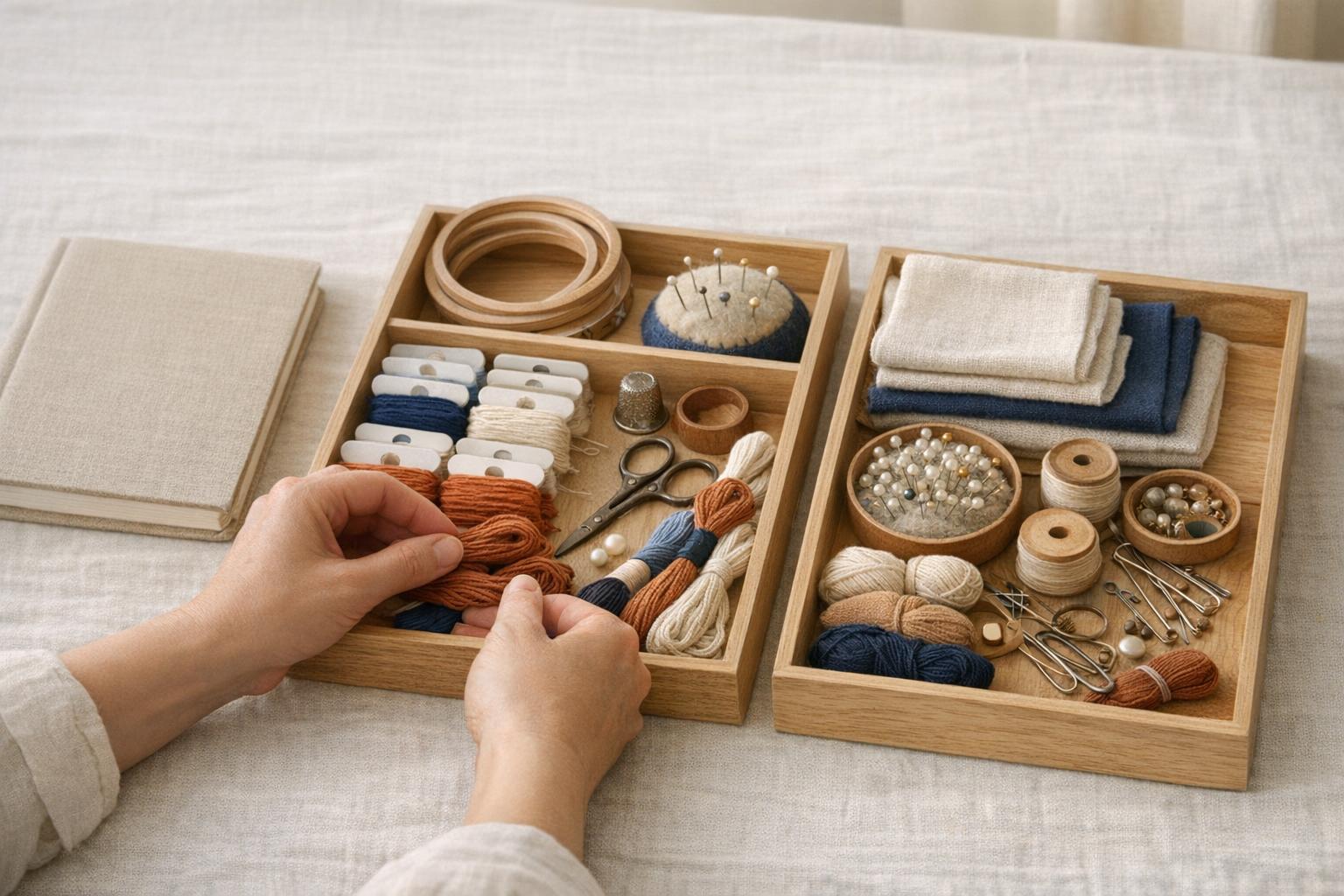
Reserve practice material that resembles the final item. A scrap of unrelated fabric can confirm that the machine runs, but it cannot answer whether your chosen backing and design work on the garment you intend to give away. Include at least one expendable blank when placement, bulk, or seams make the finished object harder to hoop than a flat scrap.
Selection documentation: New brothread.
A hypothetical budget you can replace with real quotes
The following example uses invented allowances solely to demonstrate a budget structure. It is not a recommendation to spend these amounts, and it does not imply that a suitable machine or supply bundle is currently available at any listed figure. Taxes, delivery, and regional costs must be checked separately with the actual seller.
| Budget line | Illustrative allowance | What to verify |
|---|---|---|
| Machine and included embroidery equipment | $700 | Exact model, field, condition, and contents |
| Thread, compatible bobbins, and needles | $65 | Manual requirements and first design's colors |
| Project-specific stabilizers | $55 | Backing type, usable width, and removal instructions |
| Practice fabric and blanks | $45 | Enough material for trial runs and the intended project |
| Small tools and transfer supplies | $35 | What you already own and what the model supports |
| Tax and shipping allowance | $60 | Actual checkout charges; this is not a tax calculation |
| Uncommitted reserve | $100 | Keep available for replacements or missing essentials |
| Total illustrative cash budget | $1,060 | Replace every amount before purchasing |
The reserve is money held back, not money you must spend. Keep it visible rather than hiding it in the machine line. If the real checkout total consumes that reserve, revisit optional purchases or the machine choice. Do not pretend the supplies will somehow become free after the largest item is paid for.
Make your own worksheet
For each line, record the item, exact compatibility requirement, quantity, seller, quote date, shipping, and whether the cost repeats. Use separate columns for “needed now” and “later.” Add a third status for “already owned and verified.” An old spool or USB drive only belongs in that last category after you confirm that it is suitable for the planned workflow.
Compare baskets rather than headline prices. One offer may include the required embroidery hoop while another requires a separate purchase. Another may include designs you do not intend to use. Give a bundle credit only for items you would otherwise buy and can verify as compatible. Assign unwanted extras no savings value in your personal comparison.
Software is optional until a specific job requires it
Do not add a full digitizing package just because you are buying an embroidery machine. A purchased, compatible stitch file may already do the job. Brother documents transferring prepared embroidery data to the PE770 using USB media.[1] That workflow is different from turning an original drawing into an embroidery design, which requires additional planning and appropriate tools.
List the operation you need: viewing a file, printing a placement template, changing a layout, converting a supported format, or digitizing original artwork. Then confirm that the proposed software performs that operation on your computer and exports appropriately for your machine. Check the current license terms, update policy, and any recurring charge before adding it to the budget.
For occasional custom artwork, request a quote from a digitizing service and compare it with the cost and learning time of doing the work yourself. Ask what sizes, revisions, files, and usage rights the quote includes. This guide does not supply a service rate because artwork complexity and the scope of the job have not been specified.
Design purchases also deserve their own line. Download a small number of suitable designs rather than a huge collection selected by discount percentage. Keep receipts and license terms with the files. If you intend to sell embroidered items, confirm that the license permits that use; a personal-use download should not quietly become the foundation of a business plan. Before adding optional software to the basket, reserve the physical supplies for that sample: a permanent backing such as Soft ’n Sheer is a documented candidate for suitable lightweight knits or wovens, subject to testing. [Manufacturer documentation]
Selection documentation: Sulky Soft ’n Sheer 235-12.
Budget for the work that does not become a finished gift
Practice uses supplies. A trial stitch-out, a misplaced motif, and a backing experiment consume material even if nothing goes into the gift bag. Record those uses honestly. Otherwise your estimate of cost per finished item will describe an ideal process that you have not yet achieved.
After a few projects, divide spending into equipment, consumed materials, and supplies still on the shelf. Buying a roll of stabilizer does not mean you used the entire roll on one towel. Conversely, a leftover piece is not automatically usable if it cannot be held securely for the next design. Track the portion that actually serves your work.
Your time matters even when this remains a hobby. Include downloading and checking files, winding or installing bobbins, hooping, thread changes, trimming, cleanup, and rework when planning an evening. Do not infer output from the machine's advertised maximum speed alone. If a seller promises a payback period, ask what assumptions they made about labor, waste, and demand.
Leave room for care and support
Maintenance supplies should follow the model's instructions. Brother's race-cleaning guidance for the listed models calls for a cleaning brush or vacuum and explicitly says not to oil the bobbin case.[4] That is a reason to read before buying a generic “maintenance kit,” especially one centered on lubricants. The correct care items depend on the machine.
Ask a local service provider what they support, how they quote work, and whether transport or inspection adds a charge. Keep the response dated in your worksheet. Do not assume a warranty covers every adjustment, consumable, shipping cost, or problem with used equipment. Read the applicable written terms and ask the seller to clarify any missing documentation.
What can usually wait in a beginner's plan
Put specialty thread collections, decorative storage, extra hoops, and advanced software on the later list unless the first project needs them. This is a budgeting recommendation, not a claim that those tools are unhelpful. Each purchase should solve a problem you can name. “It might be useful someday” is not a strong reason to shrink the supply reserve.
If your intended designs genuinely require a larger field, compare 5 x 7 embroidery machines before buying a smaller setup you already expect to replace. If the larger field is only a vague future wish, price both complete baskets and decide how much you are willing to reserve for that possibility.
Finish with a purchase gate: the machine fits your actual designs, its transfer method works with your equipment, the necessary accessories are accounted for, and enough money remains for practice. Save dated quotes, but expect checkout totals to change. A useful startup budget tells you what you can make with the whole setup, not merely which machine you can afford to bring home.
Selection documentation: Brother PE545.
Sources and scope
Sources checked September 10, 2026. Manufacturer instructions are model-specific. This guide is editorial research, not a hands-on product test. Your current model manual takes precedence.